11 – Strength
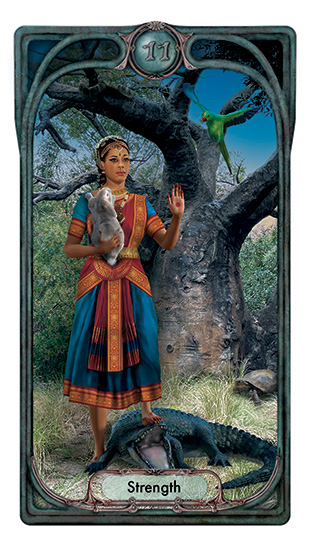
The figure at the center of this Tarot card stands calmly among animals in their natural habitat. Unlike traditional depictions of Strength, she does not subdue a beast through physical force. Her authority arises from understanding rather than dominance. She is integrated into the natural world, not opposed to it, and the animals respond to her because she knows how to work in harmony with their nature. Control here is achieved through knowledge, presence, and earned authority.
Her posture is upright and composed, entirely non-aggressive. This establishes immediately that strength in this card is not exertion, but steadiness. She does not struggle. She stands.
Her attire references Bharatanatyam, a classical dance form that demands extreme discipline, precision, and embodied control. This signals mastery that is cultivated through sustained practice and conscious refinement. Strength here is learned, internalized, and maintained over time.
The dancer’s stance reinforces balance, intentionality, and command of movement without excess.
The animals surrounding her are not restrained. Each remains fully itself. The alligator beneath her feet represents primal power and latent violence, yet it is subdued not by weapon or conflict, but by her unshaken presence. Standing upon it signifies dominance through clear assessment of risk rather than denial of danger. She recognizes threat without being ruled by it.
The other animals represent vulnerability and responsibility. Strength is expressed not only in facing what is dangerous, but in protecting what is fragile. The animals trust her. In her presence, they fear neither her nor their natural predators. Her raised hand is not a gesture of threat or command, but one of calm authority and boundary-setting. She does not wrestle with danger. She halts it through understanding.
The presence of multiple species emphasizes that her power is adaptive rather than uniform. She does not apply a single method to every force. Each animal is engaged according to its nature. This reflects expertise, empathy, and situational intelligence rather than brute control.
The natural setting reinforces that this strength operates within lived reality, not abstraction. There is no separation between the figure and her environment. Strength is shown as contextual, responsive, and grounded in experience.
I made a reference to the traditional iconography of this card by including the lion, a typical symbol of strength, into the brocade trim of the costume. There are two separate patterns: Opposing lions on the sleeves of the blouse and a lion’s head on the wider trim on the chest, hips and skirt.
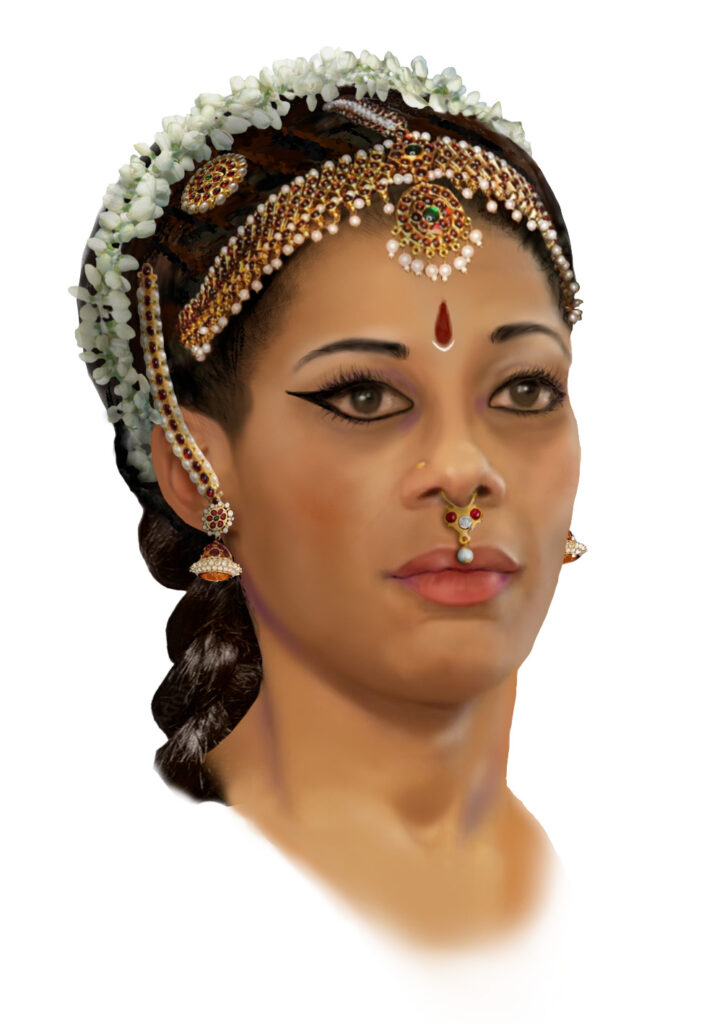
A considerable amount of work went into the creation of this card. Because I used a specific person as a model it was important to me to get an accurate likeness of the subject, so although the finished work is small, the original components were quite large and detailed.
Kickstarter Campaign Launching October 1, 2026
Provide your email address below to receive a notification when the campaign launches. The completed Tarot deck and companion book will be available for purchase at the close of the campaign if the Kickstarter funding goal is met.