20 – Judgment
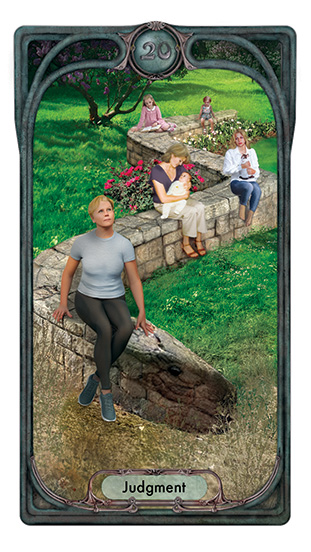
Traditionally, Judgment depicts an angel sounding a trumpet while figures rise from graves below. The dead emerge upward with arms raised, answering a divine summons. The scene represents resurrection and final judgment: a moment when lives are assessed and souls are called to account.
In the Jewish tradition, the living are called to judgment each year at Rosh Hashanah. During the ten days that follow, individuals reflect on their actions and make restitution before Yom Kippur, when their names are said to be inscribed in either the Book of Life or the Book of Death. Whether or not one believes in divine judgment, the practice of periodic reflection can have a profound effect on personal growth.
This idea lies at the heart of this card: the opportunity to evaluate and redirect our lives as we move through the stages of childhood, adulthood, and old age.
Such reflection often carries both nostalgia and reconsideration. We may see the past more kindly than it truly was, yet we also begin to understand the roles we and others played in shaping the person we have become.
The imagery expresses this process through a sequence of figures arranged along a curving stone wall that winds through a garden landscape. Each figure represents a different stage of a single life.
A small child sits among spring tulips, absorbed in the immediate wonder of existence. Nearby, a young girl reads beneath a lilac tree, discovering the wider world through curiosity and learning. A teenager rests between innocence and independence, poised on the threshold of adulthood. Further along, a young mother cradles her infant in a summer rose garden, her attention shifting from her own life toward the life she now nurtures.
In the foreground sits the woman in the later chapter of her life. She reflects quietly on the life behind her, looking not toward heaven for absolution but toward the open sky in contemplation and acceptance of what lies ahead and beyond.
The wall functions as a visual timeline, its gentle curve reflecting the winding path of lived experience. As the viewer’s eye moves along it, the different selves that have existed over time become visible as part of a continuous story.
In this interpretation, Judgment represents the moment when a person sees their life clearly as a whole. Past joys, mistakes, regrets, and accomplishments are no longer separate fragments but part of the same narrative.
Where earlier cards confront upheaval, fear, and recovery, Judgment marks the moment when those experiences are finally understood in context.
It is the awakening that comes through self-recognition—the moment when a person sees clearly who they have been, who they are, and who they may still become. It calls us to face, with strength and honesty, the path of our lives and the shape of our own souls.
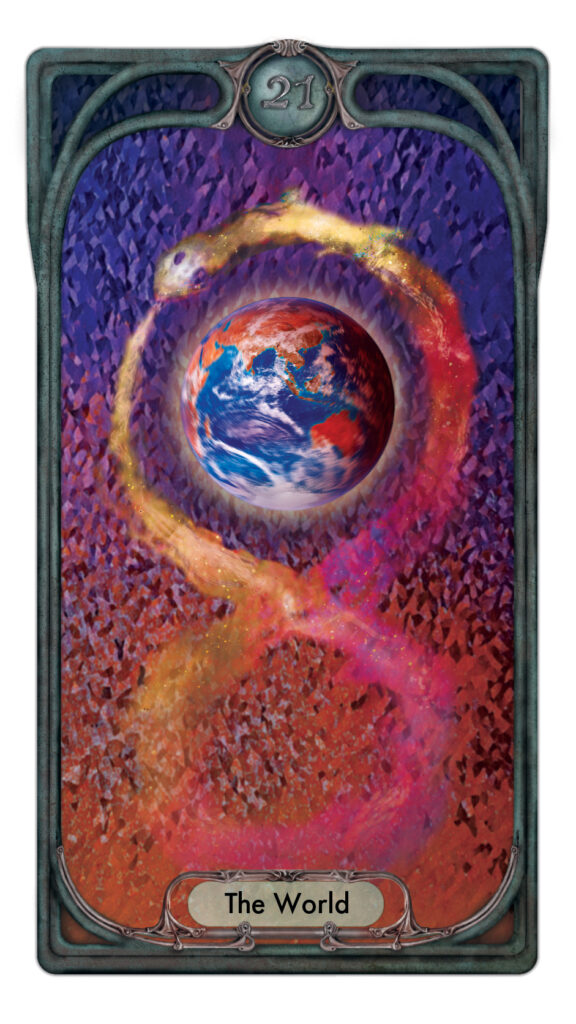
From this moment of clear self-recognition arises the possibility of wholeness—the state represented by the final card of the Major Arcana, The World.

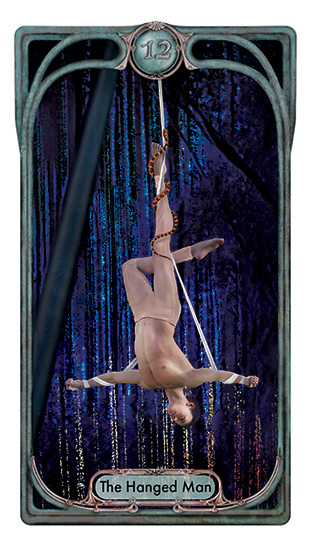
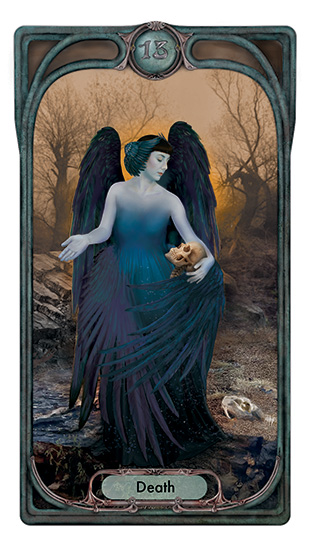
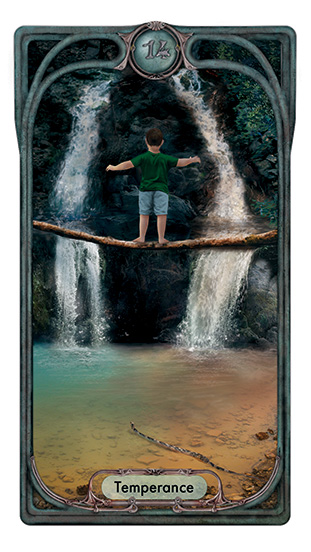
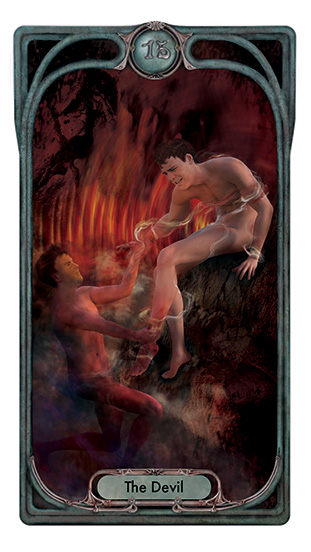
Kickstarter Campaign Launching October 1, 2026
Provide your email address below to receive a notification when the campaign launches. The completed Tarot deck and companion book will be available for purchase at the close of the campaign if the Kickstarter funding goal is met.