3 – The Empress
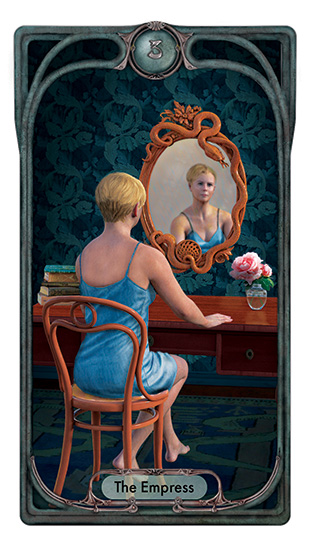
In traditional tarot decks, the Empress sits on a throne surrounded by symbols of power relating to both the natural and the material world. She is associated with fertility, nurturing, love, and creativity. This card is often heavily loaded with symbols from many origins, including the zodiac, represented by twelve stars arranged around her head like a crown.
This card represents a significant departure from traditional representations of the Empress. Rather than facing the world as a ruler, she sits with her back to the viewer, her face visible only in reflection. Instead of surveying her dominion, her gaze is turned inward. In place of opulent robes and golden objects symbolizing her power, she wears only a slip.
I made these decisions to force a re-evaluation of the card. It seemed to me that the familiar symbols of the Empress’s power were not only cliché and outdated, but also prevented a deeper exploration of what I believe is the true source of her power.
In my interpretation, the Empress draws strength and wisdom from knowledge, learning, curiosity, and life experience. She must first find peace within herself before she can bring harmony and prosperity to the realm over which she rules.
The peonies on the table speak to her connection with the beauty and abundance of the natural world. The books symbolize her quest for power through knowledge, while the snake surrounding her mirror is a constant reminder of the responsibility of power and the consequences of its corruption.
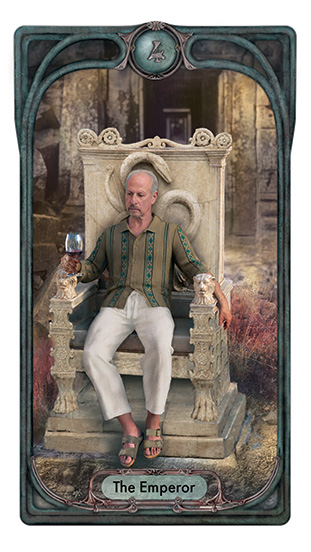
This card is the partner of the Emperor, and also its counterpart. Together, they form a set that expresses a traditional view of feminine and masculine power that I felt needed to be re-examined in a more modern context. The Empress is concerned with love, emotion, nurturing, and fertility. The Emperor represents action, authority, control, and discipline.
Taking a feminist approach, I chose to make an Empress who led not just from the heart, but also from the head. I wanted to show the value of power rooted in love for humanity and the natural world, a power that leads without violence or dominance. The power of the Empress is strengthened by her wisdom and compassion, not weakened by it. Her strength is demonstrated by her willingness to expose vulnerability.
Although this is the third card in the Major Arcana, it is the last card that I created in the series. It took me nearly a year of thought to arrive at a design that expressed my vision for this card. It is the most personal card in this deck because it is also the way in which I chose to put my artist’s signature on this work: this card is a self-portrait.
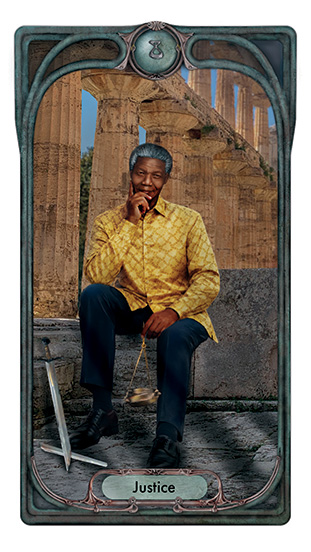
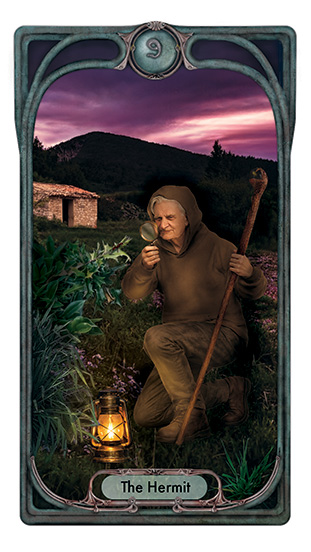
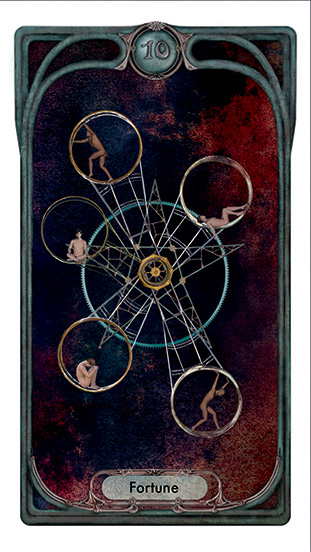
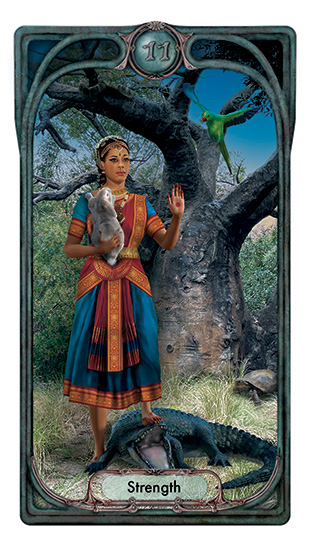

Kickstarter Campaign Launched October 1, 2026
Thank you for your interest in this campaign. Visit it on Kickstarter for updates.