About this Project
History
When I first encountered the tarot at eighteen, I was fascinated by its symbolism but also troubled by some of it. Certain cards, like the Hanged Man, for example, seemed contradictory. Others, like the Tower, seemed quaint or abstract to me. I had difficulty reconciling their meaning with their imagery. Exploring each of the cards in the Major Arcana gave me the opportunity to express them in a way that solved these problems for me. At the same time, digging deeply into the symbols, imagery, and meaning of each card became a personal journey of self-discovery. It opened my eyes to the depth and richness of the human experience they encapsulate.
In my early twenties, I discovered the Thoth Tarot and the rich, evocative paintings by Lady Frieda Harris. As a recent graduate in Fine Arts, I was in awe of the creativity and originality of her work. It became my dream to illustrate a deck of my own. Unfortunately, at that point in my life, I had not yet developed the tools required for the job. After facing the grim reality of trying to make a living as an artist in the pre-digital age, I became a software engineer instead. Upon retirement, the question of what I should do next was immediately answered by an idea I’d thought was just a youthful whim, but turned out to be a promise to myself I had to keep: Design a deck of tarot cards. After decades of life experience, I felt I finally had the tools I needed.
Just as artists centuries ago used the tools, conventions, and worldviews of their time to design their tarot decks, modern artists do the same. While it is fine to pay homage to the past and respect tradition, it seems artificial to create a tarot deck in the 21st century with those same worldviews and aesthetic sensibilities. I wanted to make my tarot deck relevant to how we live and think today. It also didn’t feel authentic to me to create a modern tarot deck based on customs, beliefs, and imagery that I do not share.
Although the tarot is commonly used as a tool for divination, I do not believe that it possesses any magical or occult power. Even though I have used the tarot for decades, I have never used it as a fortune-telling device, for the simple reason that I do not believe in any supernatural power. I believe in science and in the power of the human mind.
I believe that we determine our own futures by how we choose to live in the present moment. That philosophy is the basis of The Rational Tarot. Looking at the tarot from that point of view encouraged me to strip away everything from the cards that required the suspension of logical thought, or the reliance on faith, dogma, or mysticism to explain the course of human events.
My Process
My artistic process took a layered, constructive approach to each card. After stripping away the traditional visual aspects of the card that held no meaning for me, I rebuilt it from an archetypal foundation. The cards were created as digital collages that combined photography with digital painting. When a card was centered on a figure, I used an avatar or persona based on someone important in my life who embodied those qualities or forces.
For each card, I typically spent about a week visualizing alternative representations. The next step was to compose the image in my head and sketch it as a two-dimensional layout.

After I had a solid plan for the card, I searched my photo library for suitable images or photographed new scenes and objects to form a collage.
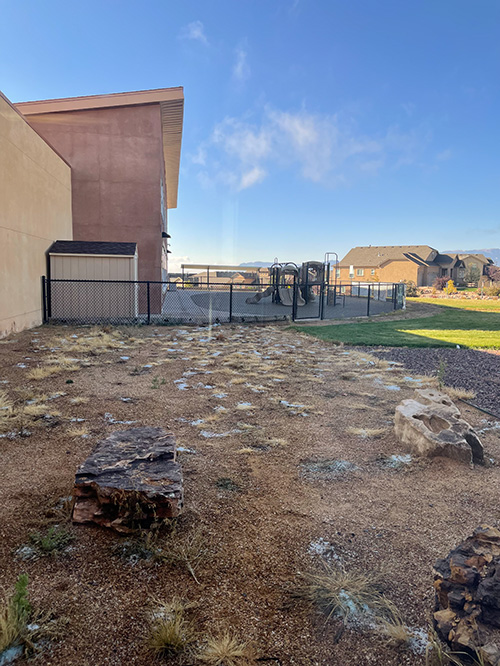
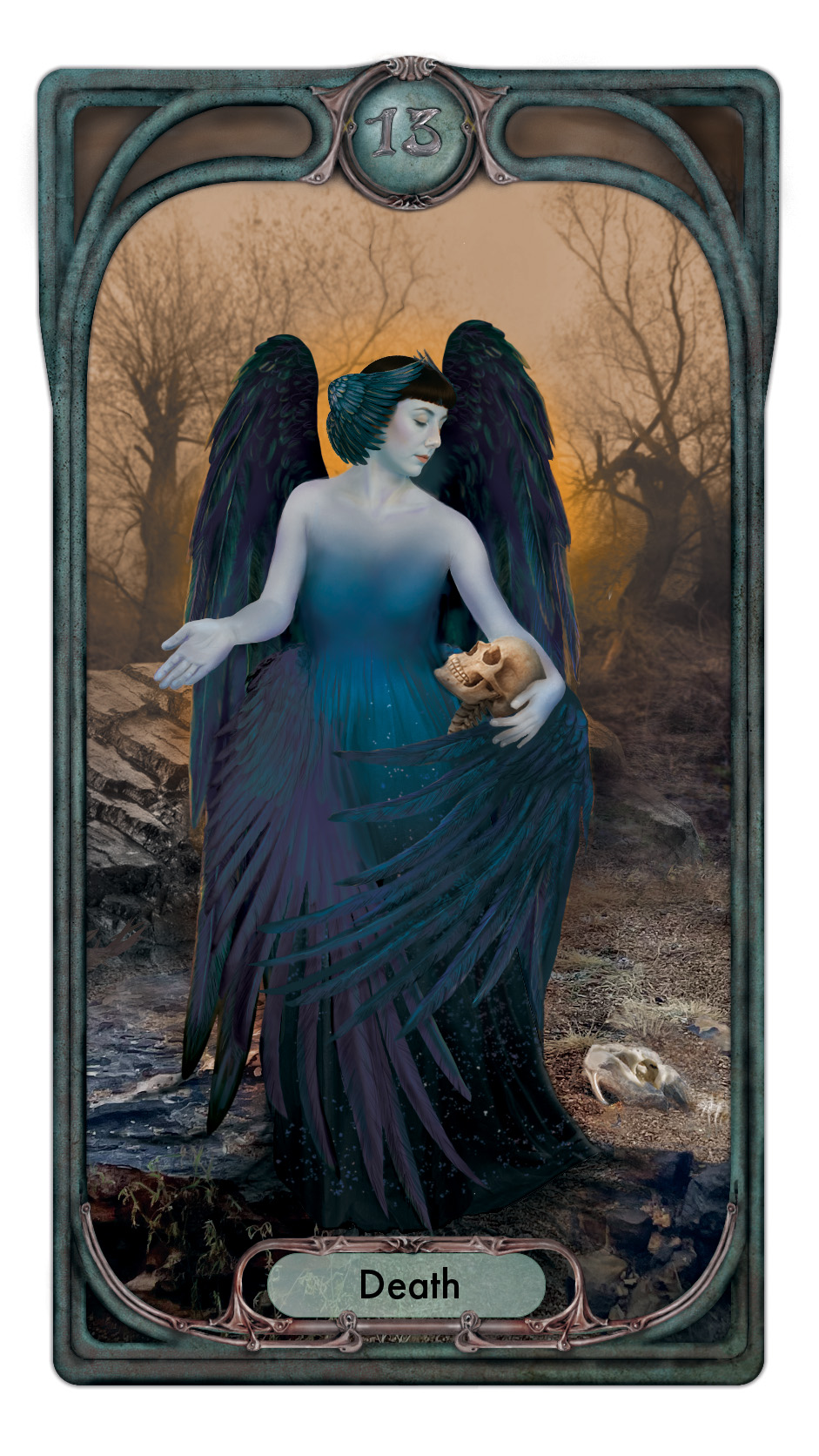
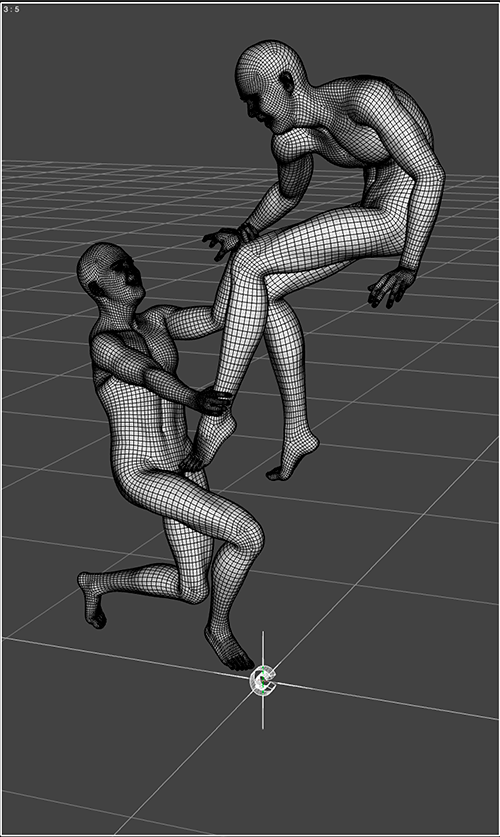
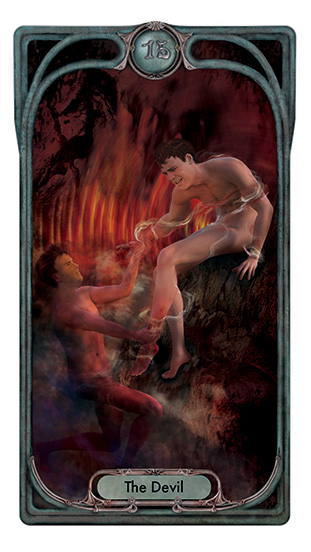
I used 3D posing tools to model the figures and composite them with props or integrate them with their surroundings.
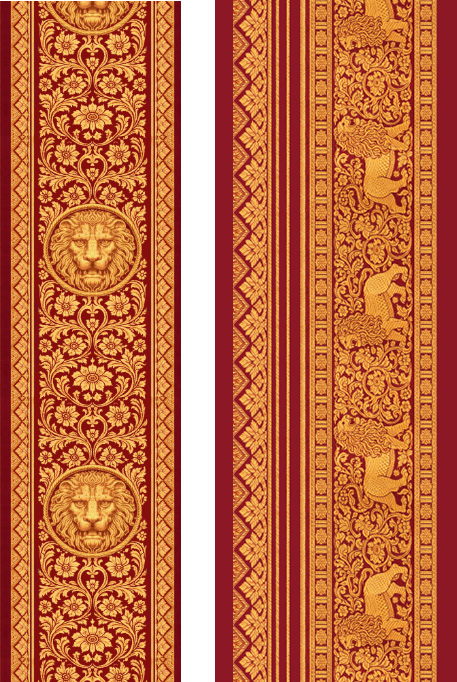
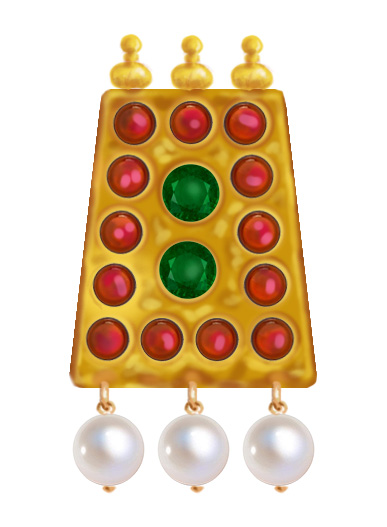
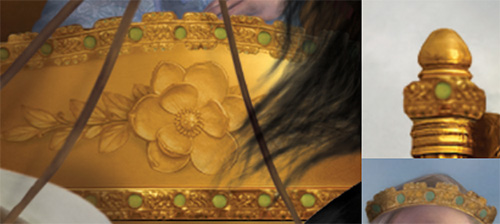
Clothing and accessories took several days to complete. A fabric drape, like the one used for The Hierophant, required designing the pattern from scratch, refining it until it tiled perfectly, importing it into Photoshop’s pattern library, and then “warping” it to create realistic folds. Accents, embroidery and other decorative details were painted by hand and then molded to the garment surface. Trim was applied as long patterned strips. Jewelry was painted in components and assembled. Even though these details were very small components of the card’s scene it was important to me that they be precise.
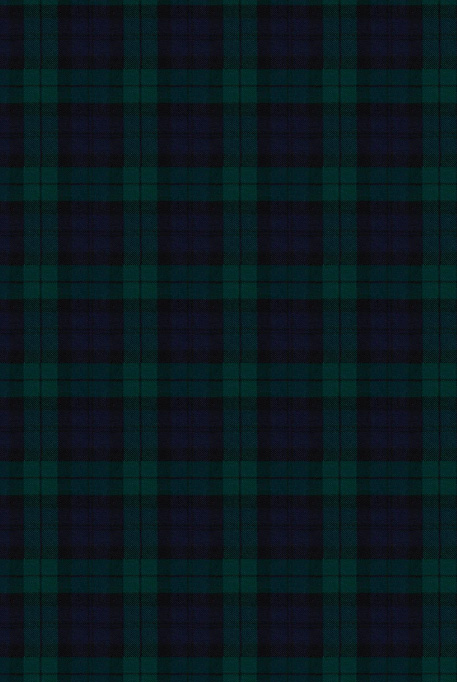
Plaid pattern for The Hierophant
Trim pattern for Strength
Necklace segment for Strength
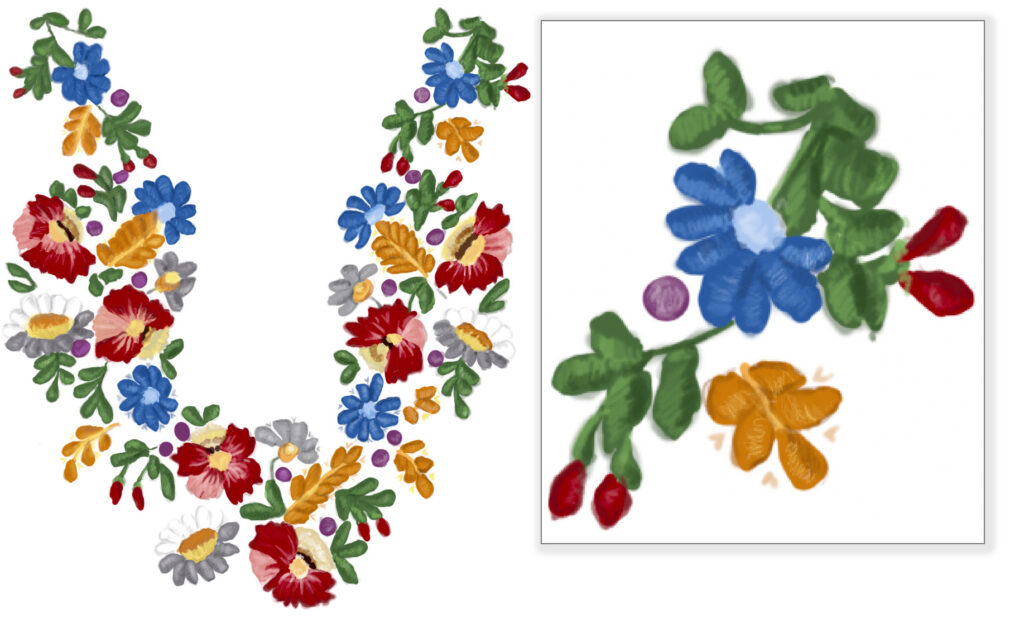
Embroidery pattern and detail for the blouse on The Fool
Throughout this project, I struggled with the use of AI tools. They are integrated into the image software I use and saved me a tremendous amount of time with tedious tasks like silhouetting an object from its surroundings—a necessity in making a coherent collage. This is just one example, but there are so many integrations of AI with image-processing software that even I do not know all of the places where they helped me.
What I do know is that computers, cameras, and AI are tools of our age, just as the camera obscura was to the artists of the Renaissance. They are not inherently bad, and using them does not invalidate our work. They allow an artist to express an idea more accurately, but they are not a substitute for creativity. They are seductive because they can instantly provide images of mind-boggling detail and complexity. But at the same time, they rob art of its humanity and rob the artist of the joy of original accomplishment. For this reason, I used AI as a helper, but I did not let it make art for me.
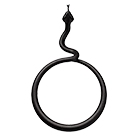
A recurring motif throughout my Major Arcana is the snake. I have always been fascinated by snakes and used to catch them in the fields where I played as a young girl. (I released them unharmed.) Without making a conscious decision to do so, I discovered that they had worked their way into one card after another. It felt so right to include them that I continued the pattern. To me, they represent the subconscious, and in the context of the tarot, they remind the reader to face their fears and embrace uncertainty.
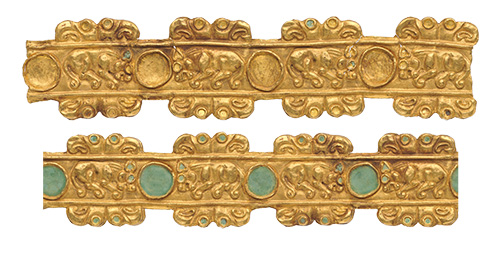
* ‘Head of a wild ram’, from the collection of the Metropolitan Museum of Art, New York, Open source imagery

Kickstarter Campaign Launched October 1, 2026
Thank you for your interest in this campaign. Visit it on Kickstarter for updates.