WIP: 15 – The Devil
The Devil presents a distinct set of challenges for me. In medieval Europe, belief in the literal existence of the Devil was widespread and culturally reinforced. Today, that figure no longer operates with the same ontological force. For most modern viewers, the Devil functions primarily as a metaphor rather than a supernatural agent, and I wanted to treat the card accordingly.
In my interpretation, the Devil represents the negation of agency. This loss of agency can arise through depression, addiction, compulsive behavior, or patterns of self-sabotage, but it is also bound up with contemporary pressures that are less dramatic and more pervasive. Chronic economic insecurity, social isolation, algorithmic manipulation, performative identities, consumer dependency, and the quiet erosion of meaning in daily life can all contribute to a state in which individuals feel trapped, diminished, or acted upon rather than acting. These conditions are not moral failures. They are survival responses within systems that reward numbing, distraction, and dependency.
In my vision for this card, the symbolic figure is bound, but that binding is only a restraint insofar as it is perceived as such by the one who wears it. The bonds do not originate from an external captor. They are composed of habits, beliefs, fears, and compromises that once served a purpose but have calcified into limitation. The bonds could be broken if they were recognized for what they are: personal choices, internalized narratives, and circumstantial adaptations that remain, at least in part, within the individual’s capacity to change.
This is the central paradox of the card. The Devil appears as an oppressor, but it has no independent power. We are, in this sense, our own devils. Liberation does not come from defeating an external force, but from reclaiming agency and accepting responsibility for the structures we have allowed to govern us. The card does not accuse; it confronts.
In developing the imagery for this card, I relied heavily on classical art and myth. I drew from the sensual ambiguity of Correggio’s Jupiter and Io, the restrained tension of Michelangelo’s Rebellious Slave, and the myths of Prometheus and Narcissus. In each of these, the figure is caught in a moment of self-recognition that is inseparable from suffering. Prometheus is bound by the consequences of his own defiance. Narcissus is trapped by his inability to look away from himself.
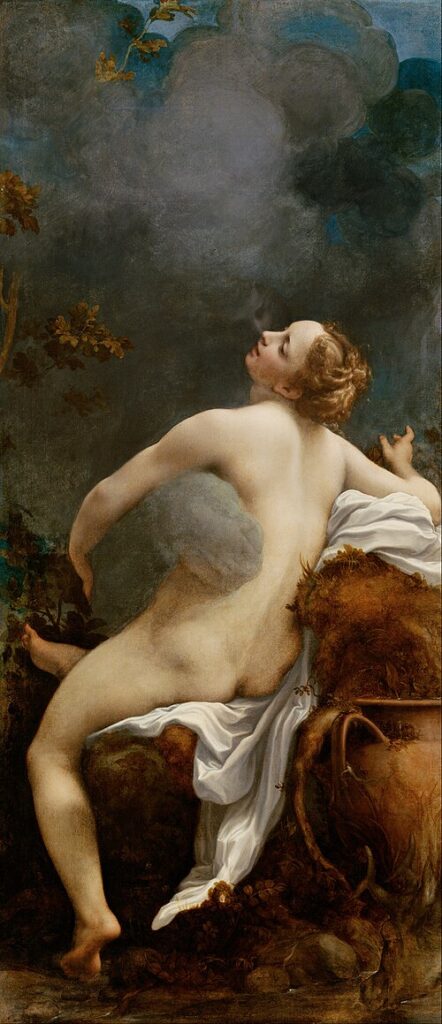
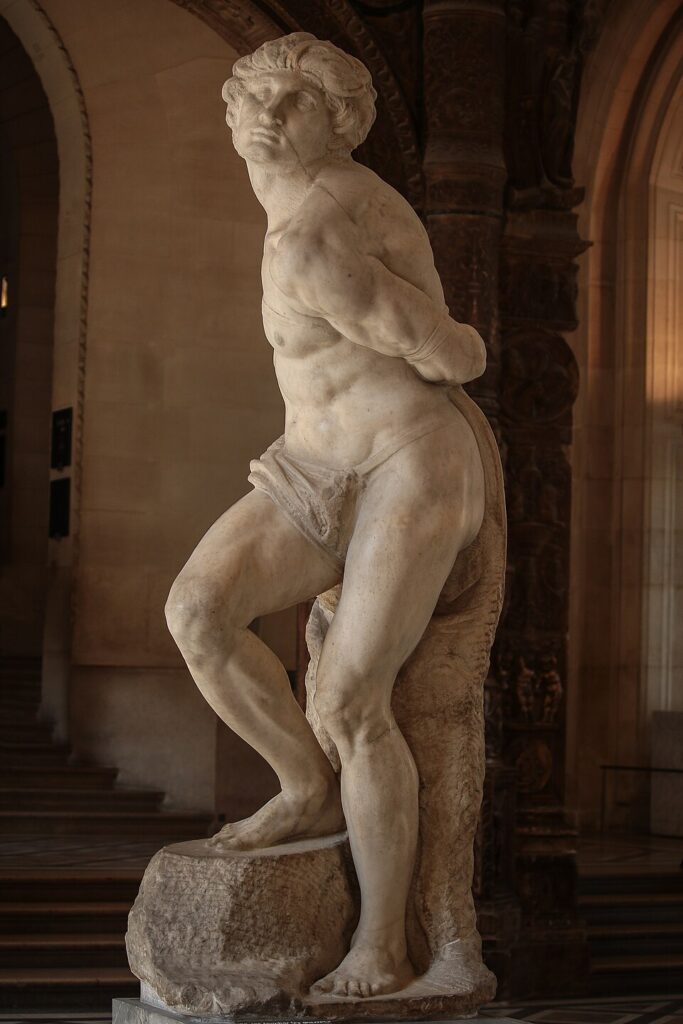
That dynamic is central to my Devil. The figure that binds the captive is not wholly other. It is a reflection, a shadow, a doubled self. The Devil is not a jailer standing apart, but a mirror standing close. The captivity persists not because escape is impossible, but because recognition has not yet occurred.
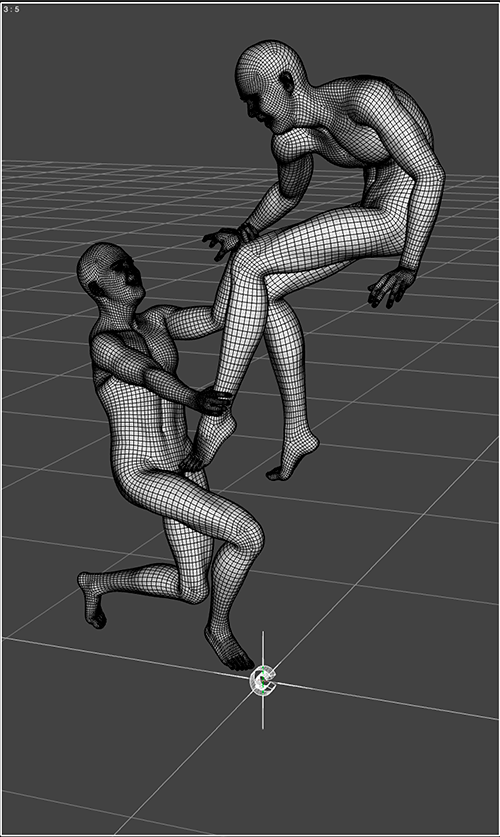
For the 3-D posing, I chose a camera placement below the horizon line. This low vantage point creates a sense of instability and downward momentum, reinforcing the impression that the figure is at risk of being pulled into an unseen depth. The Devil grips the captive by the wrist and ankle, establishing physical control while also directing the eye downward through the composition.
At the same time, the pose resists inevitability. The positioning of the captive’s free hand, along with the tension visible in the arms and torso, suggests active resistance rather than submission. The body is strained but not yet overcome. This moment of suspended motion implies that the outcome is not fixed. There is still awareness, still effort, and perhaps still the will to break free.
*This file is licensed under the Creative Commons Attribution-Share Alike 3.0 Unported license.