Creating the Figures
When I began this project, one of the earliest challenges was determining how to place convincing human figures into the scenes. Although I can draw figures from life, I avoid inventing them entirely from imagination. This is difficult enough on paper, but even more problematic in digital media. Achieving a specific pose without the benefit of a live model to work from would require many attempts, and a fully painted figure would rarely integrate cleanly with photographic or photorealistic background elements. For these cards, the figures need to approach photographic realism.
I initially experimented with photographing live models, but this approach proved impractical. When the photographed figure was placed into a developing scene, problems with lighting, perspective, and camera angle became obvious. At the time the photos were taken, I had no way of knowing where the light source would ultimately be placed, or whether the figure would be viewed from above, below, or at an oblique angle. In addition, most people are not adept at achieving a specific pose and often become self-conscious and uncomfortable with the effort.
I also experimented with ChatGPT as a way to quickly test compositional ideas. I do not use AI-generated figures directly in the finished work, for both artistic and practical reasons, but it can be useful for rough layout exploration. The results, however, are consistently flawed. While obvious errors such as extra limbs have become less frequent, body proportions are often compressed to fit its standard output dimensions, producing dwarfed figures.
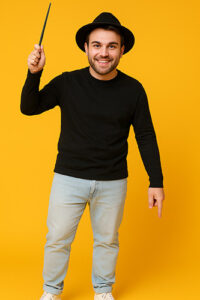
AI-generated pose for The Hierophant shows distortion in height
The solution that ultimately proved most effective was modeling figures in Daz 3D Studio. The software provides neutral base figures—bald, unclothed, and anatomically consistent—with extensive controls over proportions, musculature, and surface detail. More importantly, it allows precise control over lighting, camera position, and perspective. What it helps me with most is posing. Although refining a pose can take considerable time, the effort is worthwhile. The figures can be contorted, but never beyond what a real human body could physically sustain. The control is granular, down to individual fingers.
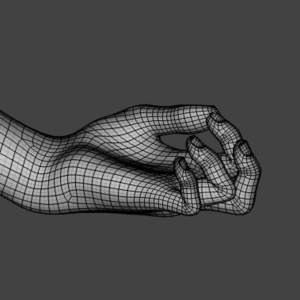
Example of precise 3-D modeling
Three-dimensional modeling becomes especially valuable when composing scenes with multiple interacting figures. Being able to rotate the scene and view it from all angles makes it possible to anticipate lighting interactions that would be difficult to detect in two dimensions. For example, when one figure’s arm touches another, the resulting occlusion creates subtle but important shadows. These effects are much easier to evaluate when the scene can be inspected in the round. The software also allows photographs of faces to be mapped onto the figures. While the results are crude, they are accurate enough to serve as a guide when painting a portrait based on a specific individual.
Working in 3D also gives me flexibility as the design evolves. If the lighting, camera angle, or emotional emphasis of a card changes, I can revise the pose without starting from scratch. Once a figure is finalized, I repaint it extensively in Photoshop to remove the synthetic quality common to rendered images and to harmonize it with the mood of the scene, using a wide range of specialized Photoshop brushes to add hair, skin texture and facial features to the models.
Although the 3-D software includes clothing assets, I rarely use them. The selection is limited, quality varies, and many garments are impractical or aesthetically unsuitable. It is far more effective to render the figures unclothed and construct the costumes manually in Photoshop. I begin by painting a simple garment structure, then build folds, seams, cuffs, and belts. Fabric patterns and trims are designed separately as repeating patterns, which can then be overlaid and warped to follow the contours of the body. In some cases, I will ask ChatGPT to generate a simple white garment on the finished figure, as a structural guide for painting folds and construction details.
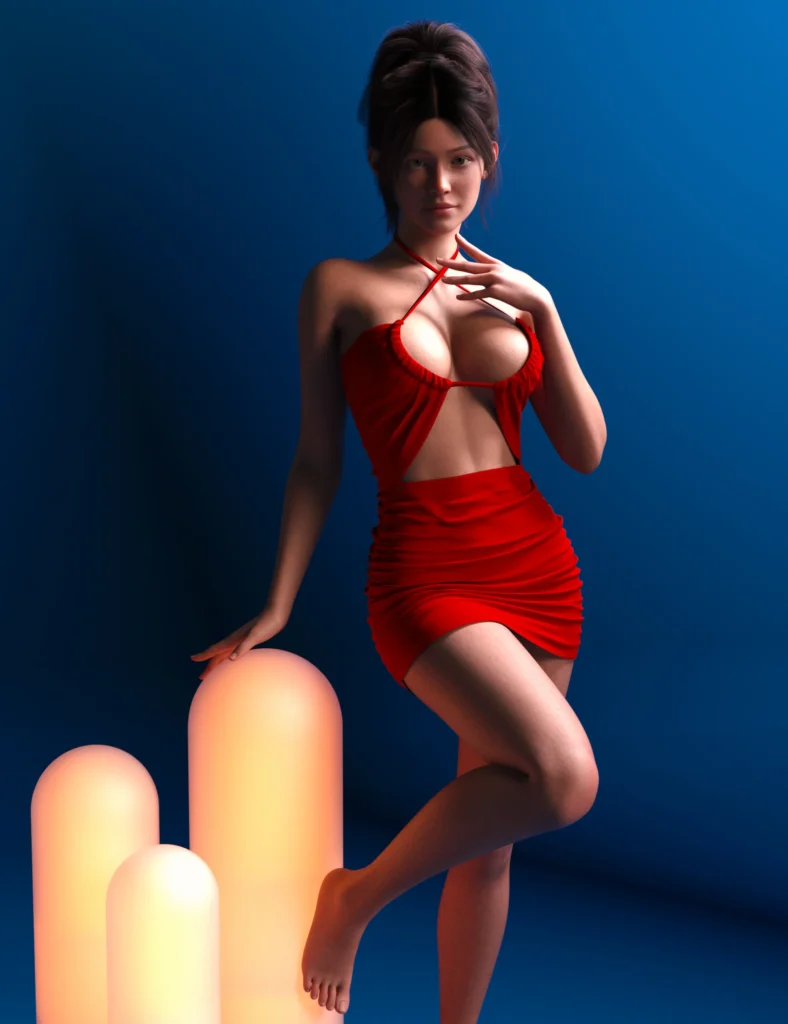
Example of a typical female costume for 3D modeling
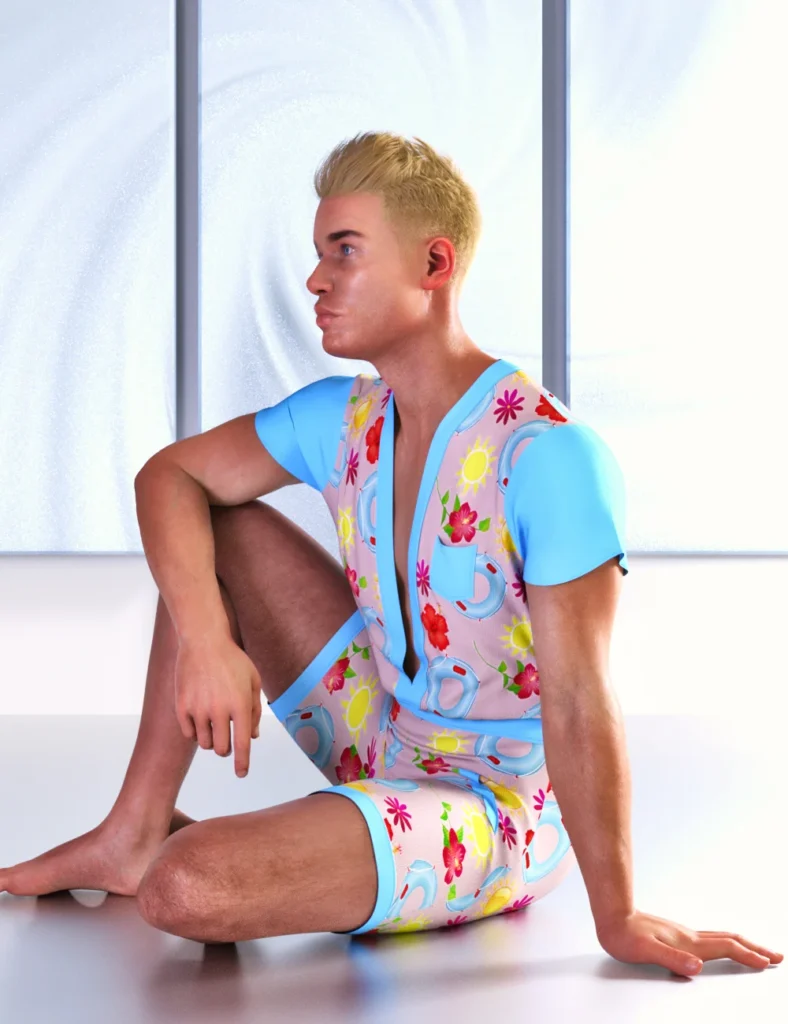
Example of a typical male costume for 3D modeling
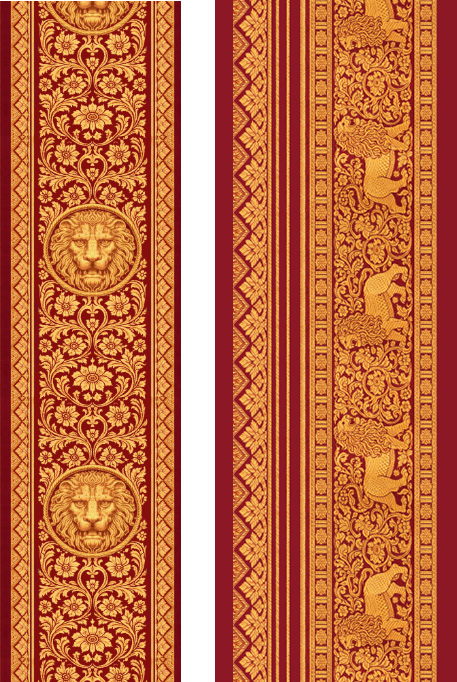
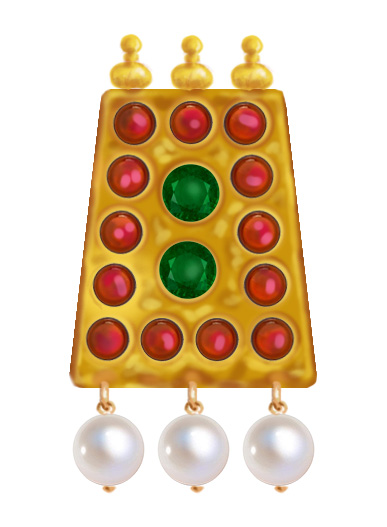
Clothing and accessories can take several days to complete. A plaid drape, such as the one used for The Hierophant, requires designing the pattern from scratch, refining it until it tiles perfectly, importing it into Photoshop’s pattern library, and then “warping” it to create realistic folds. Accents, embroidery and other decorative details are painted by hand and then molded to the garment surface. Trim is applied as long patterned strips. Jewelry is painted in components and assembled. Even though these details are very small components of the card’s scene it is important to me that they be precise.
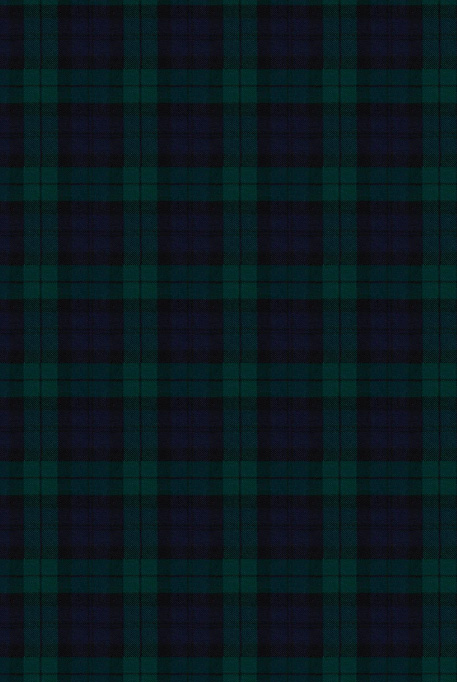
Plaid pattern for The Hierophant
Trim pattern for Strength
Necklace segment for Strength
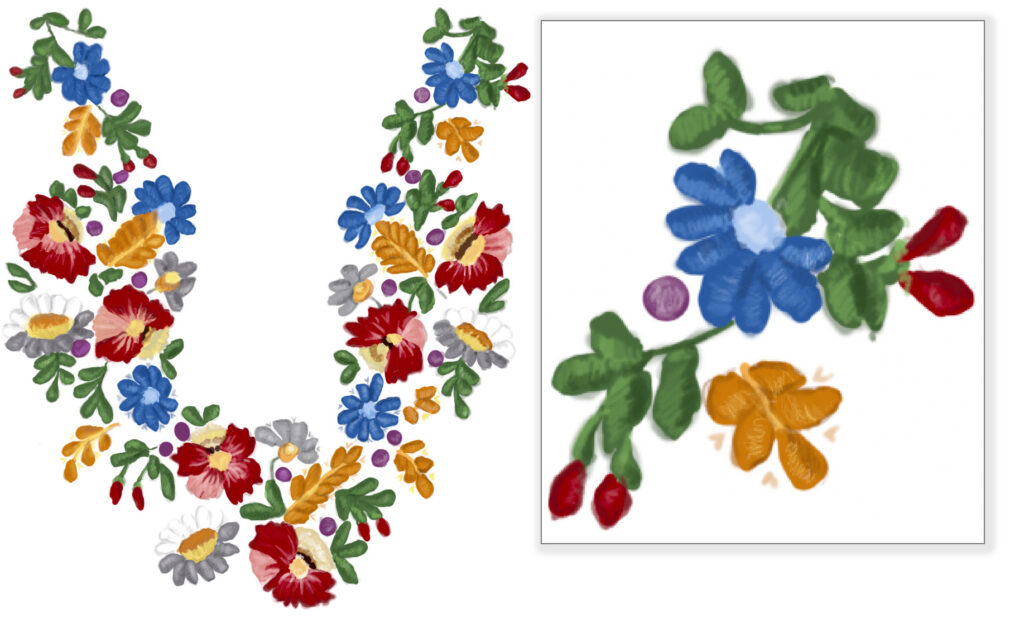
Embroidery pattern and detail for the blouse on The Fool
Once the figure has been painted, clothed, and accessorized, I make a final pass to refine lighting, shadows, and edge integration so the figure sits naturally within the scene. On average, a single figure takes about twenty hours to complete, though more complex cards may require multiple full revisions and considerably more time.